
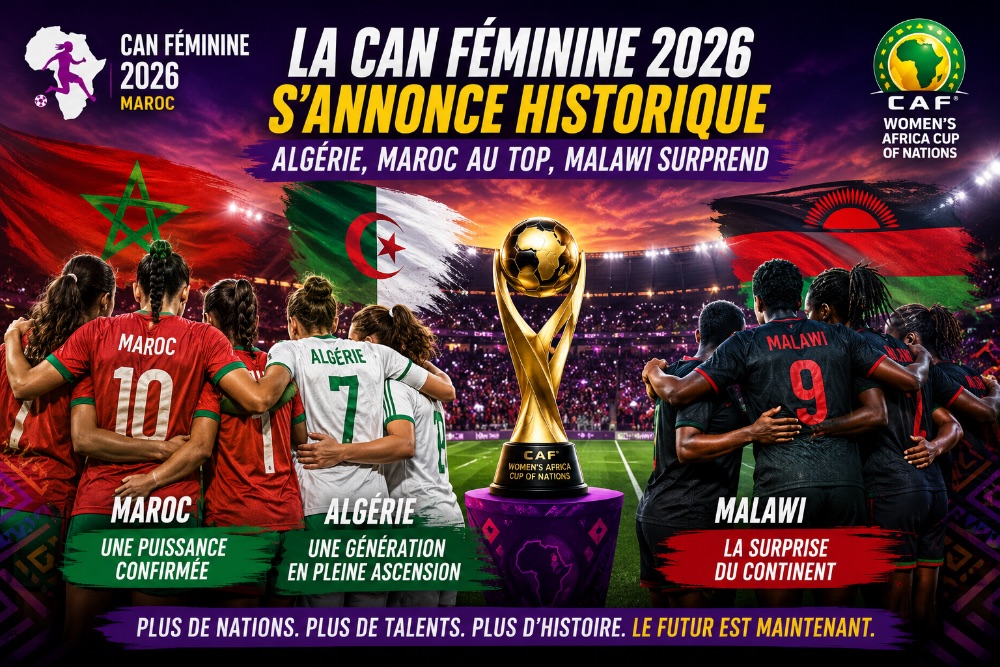
The 2026 Women's AFCON looks set to be a turning point in the history of African women's football. Algeria and Morocco on top, the Malawian surprise… Why the 2026 Women's AFCON is historic — the question is now being asked across the entire continent. Two nations with different trajectories, one outsider from the south: the field taking shape surpasses previous editions.
Morocco is no surprise. For several years, the Royal Federation has been investing heavily in women's football. The Atlas Lionesses demonstrated their level on the world stage at the 2023 World Cup, reaching the quarter-finals. Their presence among the favourites for this AFCON is the logical continuation of a structured project. Algeria, for its part, embodies a more recent rise to prominence, but one that is no less real. The women's Fennecs rely on a generation trained partly in Europe, with a competitive intensity that now makes the difference in African qualifying.
The true revelation of these qualifiers remains Malawi. The country, accustomed to fighting for recognition in men's continental competitions, sees its women's team cross a historic threshold. This qualification symbolises a broadening of the competitive base across the continent, a sign that African women's football is no longer limited to a handful of nations. At a time when several African federations are finally structuring their domestic women's leagues and investing in talent identification, the emergence of less-expected nations such as Malawi is becoming possible. The 2026 AFCON will therefore be more open, more fiercely contested, and potentially the most balanced in its history.






Comments
By posting, you agree to our privacy policy.